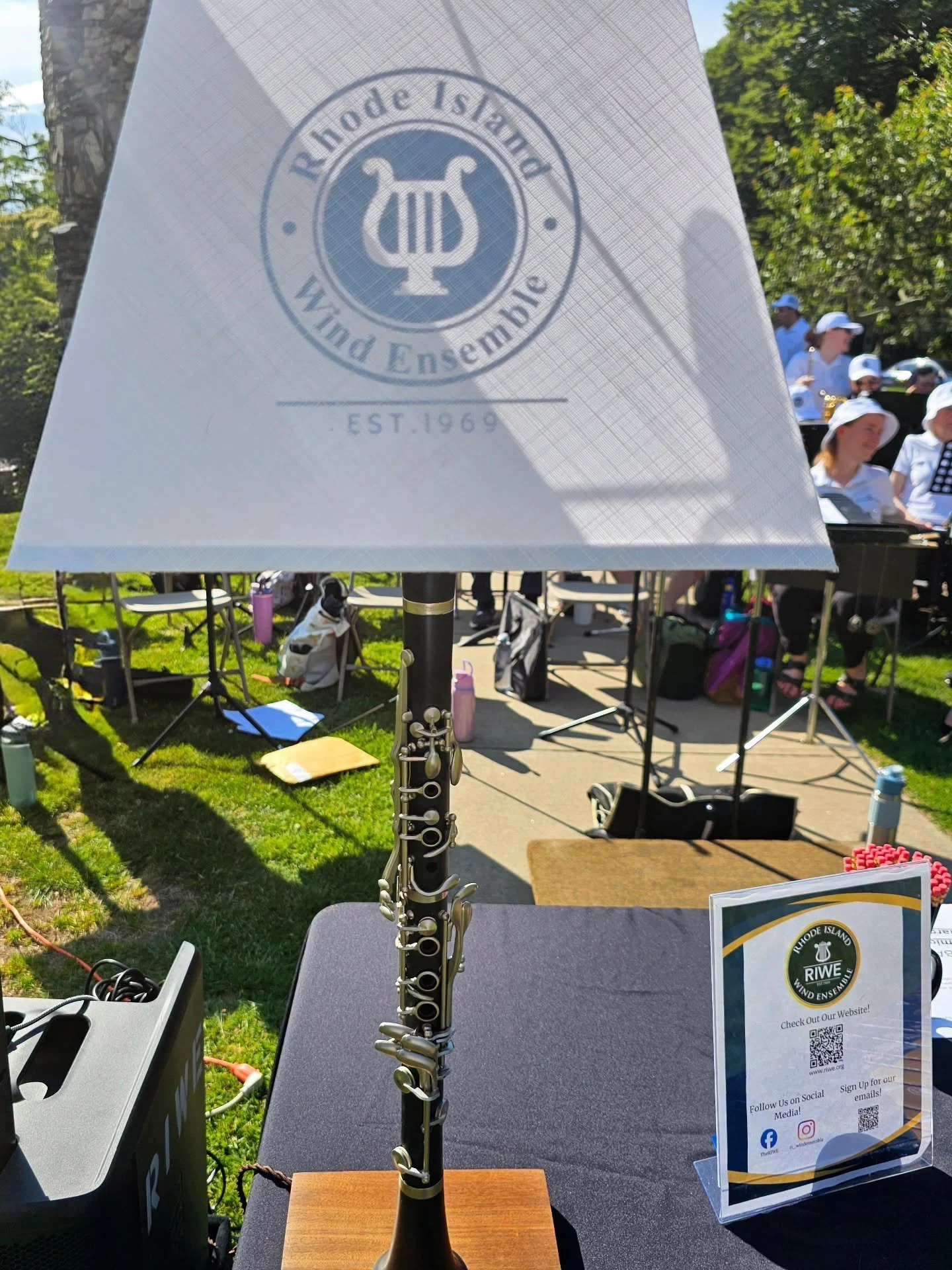
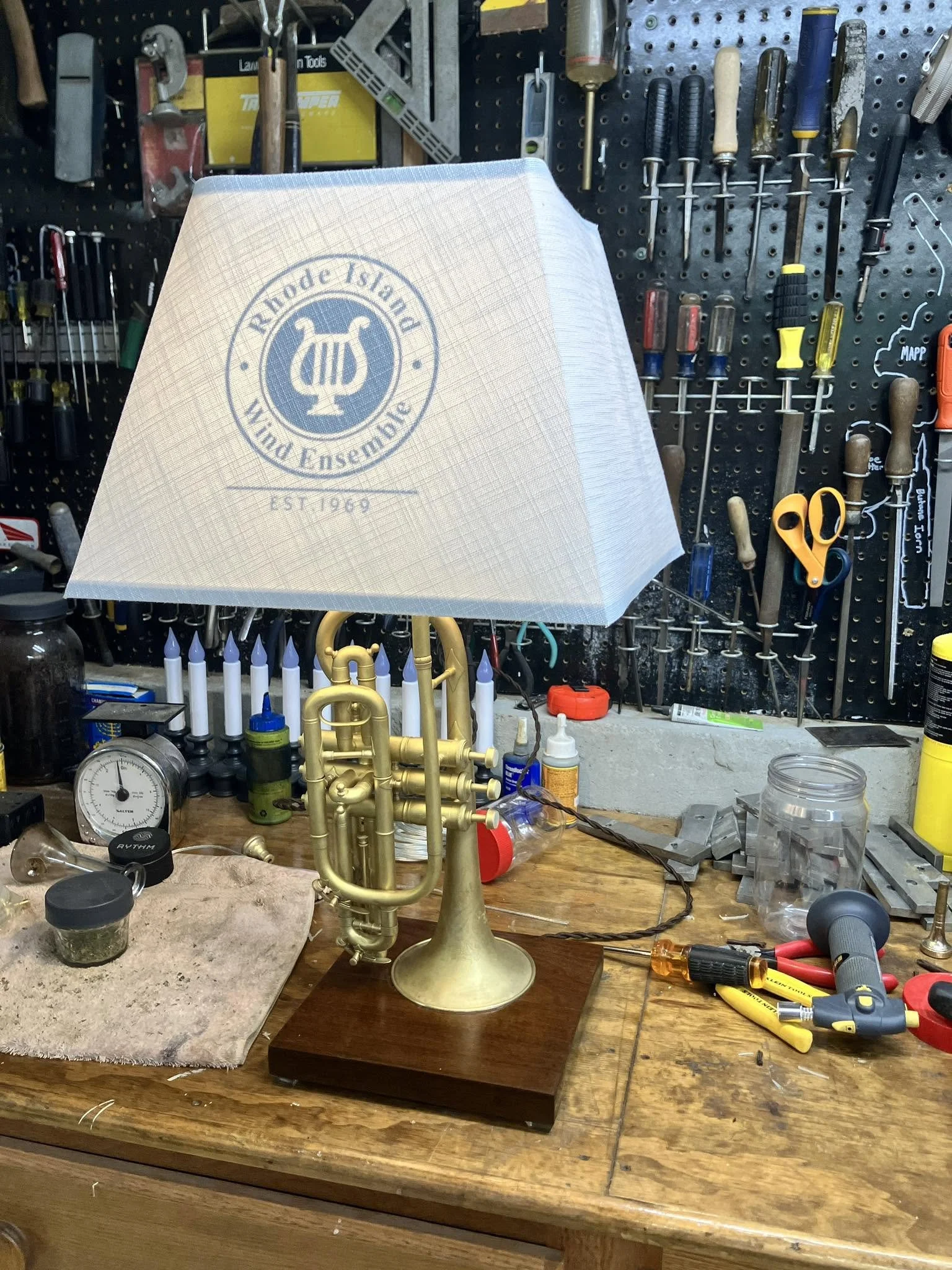
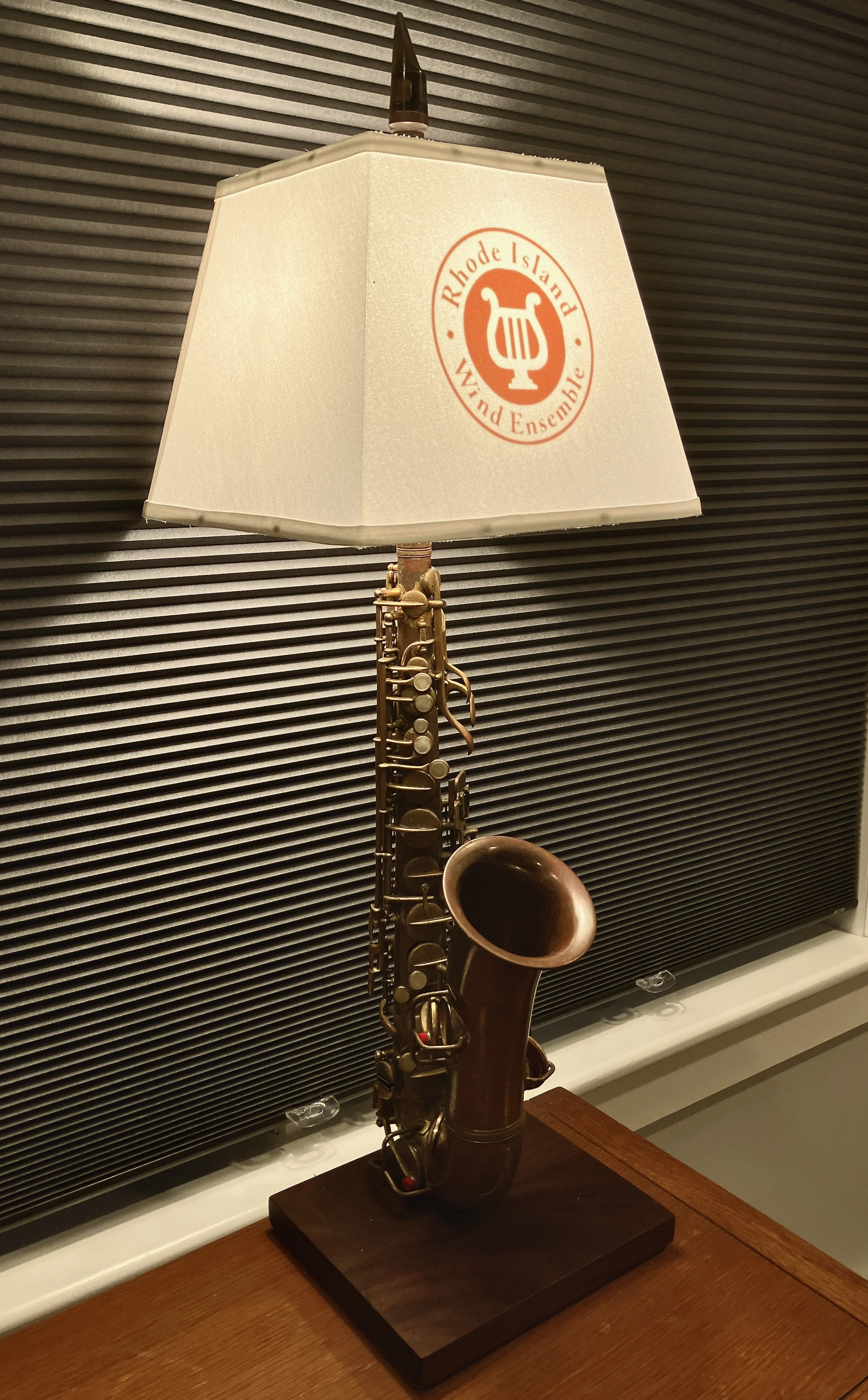
So… what’s with the lamps?
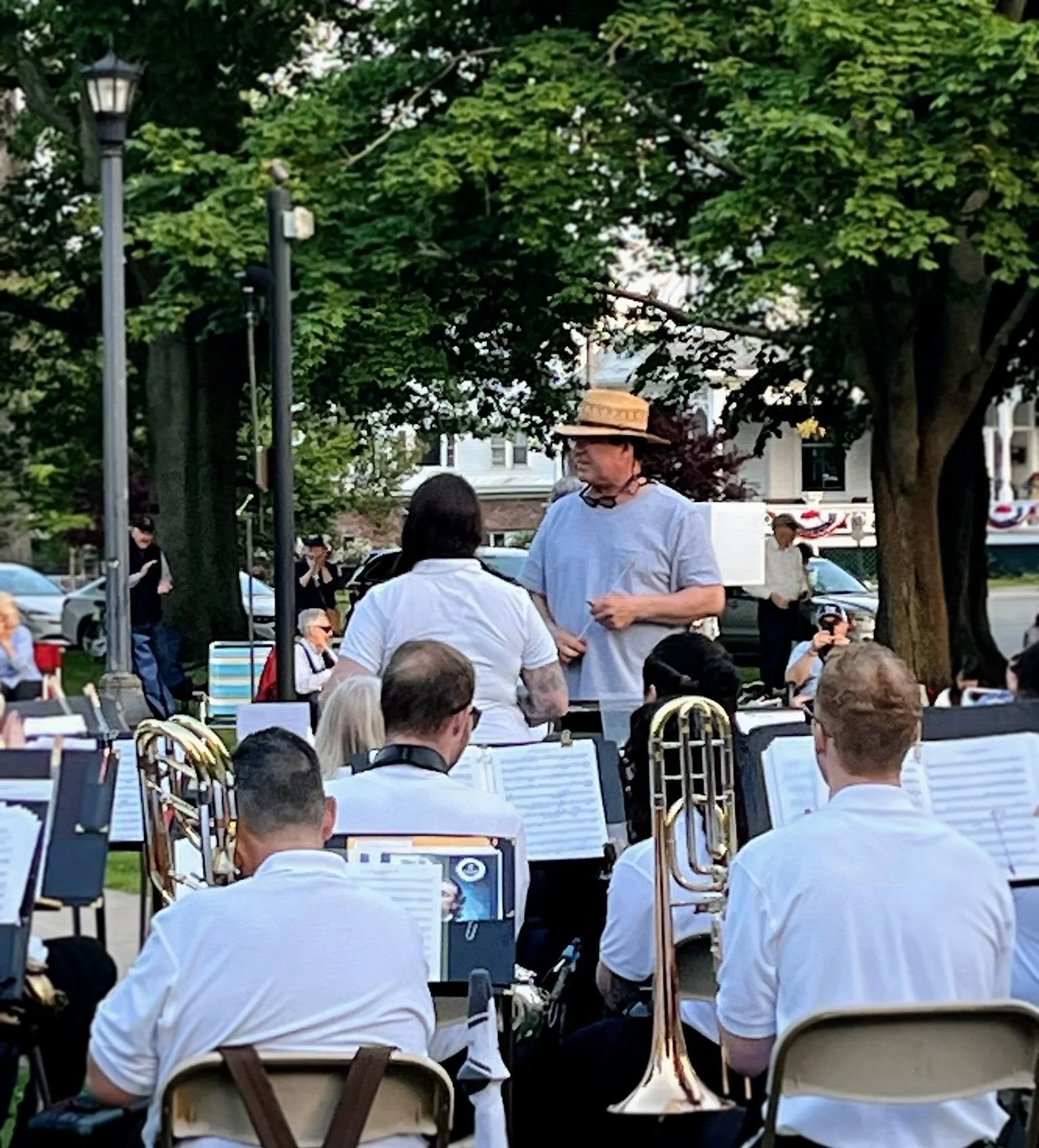
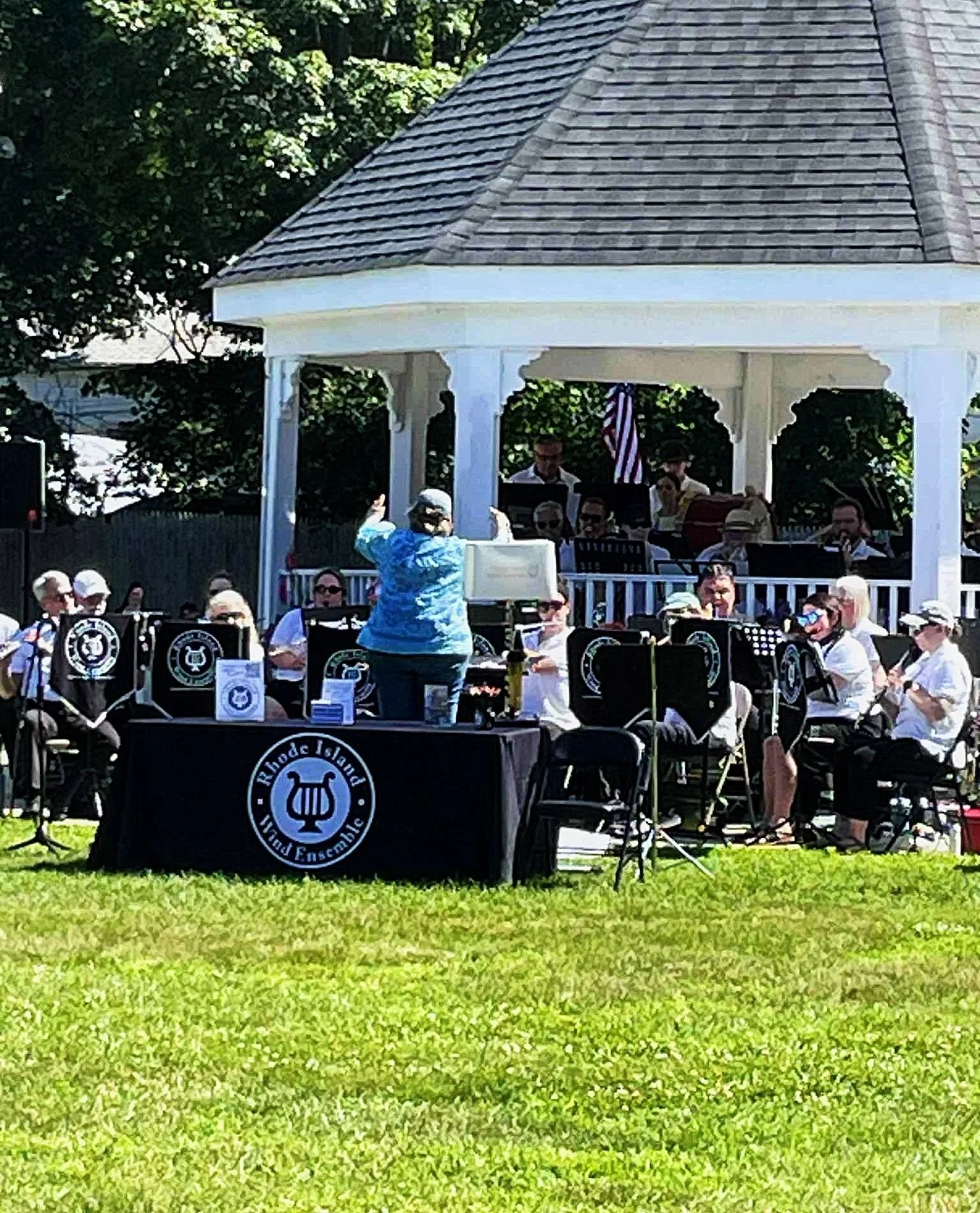
If you've been to one of our concerts lately, you may have entered your name in a raffle for a chance to conduct RIWE in The Stars and Stripes Forever. If you were the lucky winner, you also received a rather unique homemade table lamp to take home as a memento of your conducting debut. It's one of the most fun things we do at concerts. But what’s with the lamps?
Each one is fashioned from two uniquely sourced ingredients. The base of the lamp is made from scraps of one of the hardest woods on the planet, Brazilian ipe (pronounced ee-pay), left over from a deck construction. The story of the other ingredient is a little more complicated….
It begins with RIWE's Band Instrument Renewal Drive (BIRD).
The BIRD accepts donations of used band instruments, pays for their repair, and distributes them to school music programs that maintain an inventory of instruments for students whose families can't afford to purchase or rent an instrument for their child. That unfortunately describes music programs in every town across the country. As school districts face increasing budget pressures, funding for instrument replacement and repair is frequently deferred, and the need for working instruments keeps growing.
The BIRD helps schools provide equitable access to instrumental music by restoring donated instruments and placing them where they are needed most. Since its launch in March 2023, we have donated more than 150 instruments to schools across Rhode Island and southeast Massachusetts. We’re grateful for this opportunity to make a small contribution to a huge need.
Of course, not every donated instrument can be saved (we’re getting to the lamps, promise).
The decision usually comes down to economics rather than sentiment. Every donated instrument is evaluated by a skilled repair technician, who estimates the cost of getting it back into playing shape. We've been using $250 as our repair cap per instrument – more than that is just unsustainable. A few instruments come to us needing no repair at all, but not many. At the other end of the spectrum are instruments that have spent years in damp basements or garages, and...well...you don't want to know what some of their cases smell like. Most donations fall somewhere in the middle of the two extremes. The work can range from removing dents in brass instruments and freeing frozen valves and slides to replacing worn corks, installing and aligning pads, and much more.
Our batting average is a healthy .500. About half of the instruments that come to us can be repaired for less than the cap, and they receive loving attention from the repair technicians at Robert’s Music, Rick's Music, and the Village Drum (yes, we highly recommend that you do business with our wonderful partners).
But the 50% of instruments that don’t get repaired, what happens to them? They become eligible for lamp immortality, and here’s the big reveal, if you haven’t guessed by now. Yes, Virginia, I make working table lamps out of old band instruments. It’s actually not that hard.
To make the base, I table-saw the scraps of ipe (deck leftovers) into standard-sized blocks, glue two pieces together, sand them smooth, and apply a light oil finish to bring out the rich grain. Preparing the instrument for its transformation usually requires some kind of cleaning and polishing - my latest toy is a small sand-blasting cabinet with #12 glass beads, which imparts a luster to metal and cleans away old grime in a second, without having to remove keys, pads, and other complicated things. Securing the instrument to the base differs based on the type of instrument, but they all need to be fairly strong and secure.
I've made lamps from—in score order—piccolos, flutes, a failed oboe attempt (more about that later), clarinets, alto saxophones, cornets, and trumpets. They're often topped with a six-dollar Amazon lampshade imprinted with the circular RIWE logo (thank you, Shannon!). To complete the vibe of these old instruments, each lamp is fitted with a two-strand cloth-covered twisted wire and a vintage-style acorn button plug. It’s difficult to say how long it actually takes to make a lamp, because I tend to work on several at a time in batches. Maybe it takes eight hours of work to make one lamp – but that’s just a guess.
It took a lot less time to “finish” the oboe lamp I tried to make a few months ago, because I completely destroyed the instrument halfway through the process. Oboes have a very narrow bore at the top, and the lamp cord was just too thick to go through all the way. My solution? A very long shank ⅜” drill bit to ream out the inner wall enough to fit the cord through. While attempting a delicate process with only amateur tools and limited experience, the drill bit dug too deeply into the plastic oboe's inner wall. This caused the plastic oboe to violently snap in two with a radial fracture. Hope I get another oboe soon, they’re such beautiful instruments with dark black bodies and shiny silver keys… I promise to be more careful.
As I say at every concert, we believe music is a gift that all people deserve, regardless of income level, ZIP code, or background. If you have an old band instrument gathering dust around the house somewhere—or know someone who does—please consider donating it to the BIRD.
If you're able, please consider making a financial contribution. Every donated instrument must be professionally repaired before it can return to the hands of a young musician, and those repairs are possible only through the generosity of donors.
And if an instrument's playing days are truly over, it just might find a second life as one of our bespoke table lamps. Either way, your support helps keep the gift of music alive. To learn more, donate an instrument, or make a financial contribution, visit riwe.org/bird.
Thank you!